

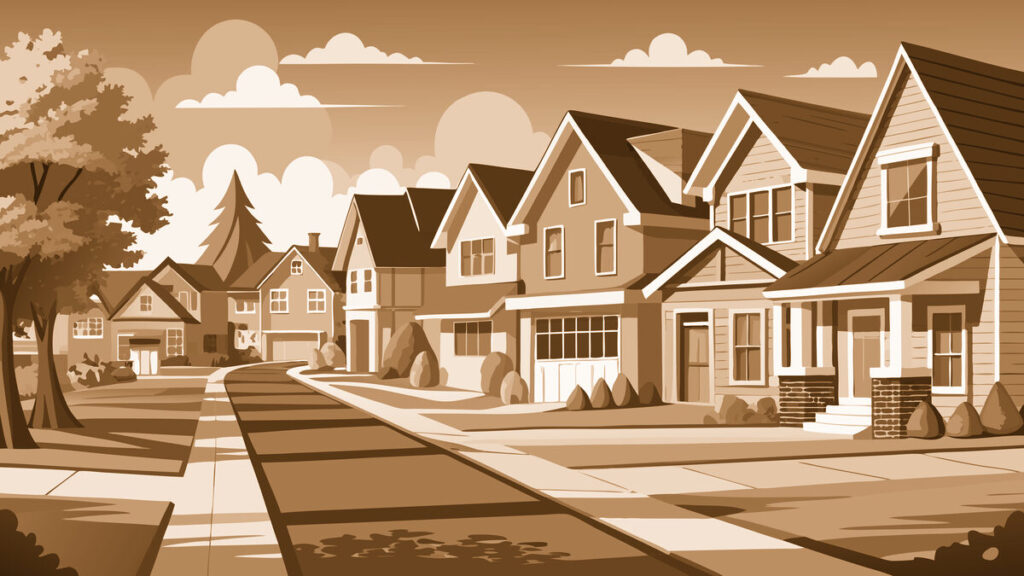
From Farm Country to a New Woodbury Community
To understand Stonemill Farms, it helps to first picture Woodbury before its familiar subdivisions, shopping centers, and broad arterial roads. For much of its history, Woodbury was a rural farming community known for fields, wooded hills, small lakes, and longtime family farms. Even the city’s earlier identity reflects that landscape: Woodbury was once known as Red Rock, a name connected to the area’s stone and bluff country.
Stonemill Farms grew from that transition between rural Woodbury and the modern suburban city. Established in 2002, the neighborhood was planned as a large, amenity-rich community on Woodbury’s eastern side. Rather than simply laying out streets and houses, its developers envisioned a place with a strong identity—a neighborhood where parks, trails, gathering spaces, and homes would feel connected from the beginning. ([stonemillfarms.com](https://stonemillfarms.com/1?utm_source=openai))
That vision is still evident today. Stonemill Farms feels less like a collection of separate housing additions and more like a village with its own rhythm, landmarks, and traditions.
How Stonemill Farms Got Its Name
The name “Stonemill Farms” reflects both the physical character of eastern Washington County and the story the community was designed to tell. The word *stone* calls to mind Woodbury’s historic limestone, gravel, and quarry landscapes, as well as the durable stonework that appears in entry monuments and neighborhood architecture. The word *farms* acknowledges the agricultural setting that preceded the development.
The name was part of a broader effort to connect the new neighborhood with Woodbury’s older sense of place. Contemporary planning and development accounts describe the community’s design as rooted in local history, including the area’s farming past, Red Rock identity, and views toward the St. Croix Valley. In that sense, Stonemill Farms is not named after a single preserved mill building. Instead, it is a modern interpretation of Woodbury’s rural and geological heritage. ([builderonline.com](https://www.builderonline.com/land/development/the-new-ruralists_o?utm_source=openai))
That distinction matters. Stonemill Farms is new compared with Woodbury’s nineteenth-century farmsteads, but its name intentionally reaches backward.
A Neighborhood Built in Phases
The first years of Stonemill Farms were a period of rapid change. Construction began in the early 2000s, and families began moving into the neighborhood by the middle of that decade. By 2006, county records already documented multiple Stonemill Farms additions, showing how quickly the community was expanding. ([washingtoncountymn.gov](https://www.washingtoncountymn.gov/Archive/ViewFile/Item/192?utm_source=openai))
The neighborhood grew in stages, with new streets, housing styles, townhomes, parks, and community facilities added over time. Streets such as Stonemill Farms Curve, Field Stone Curve, Halstead Trail, Waterview Way, Lakewood Trail, and Middleton Trail help give the area its distinctive vocabulary. Many names reinforce the community’s natural and agricultural themes, while others connect Stonemill Farms to Woodbury’s deeper history.
One especially meaningful example is Middleton Trail. According to the Woodbury Heritage Society, the street honors the Middleton family, among the first families to settle in Woodbury. Middleton Elementary School also carries the family name. A walk or drive along Middleton Trail therefore connects a contemporary neighborhood street with one of the city’s earliest settler families. ([woodburyheritage.org](https://woodburyheritage.org/woodbury-street-name-history/?utm_source=openai))
By the 2014–2015 period, the city described Stonemill Farms as nearing completion, even as Woodbury continued planning for additional growth nearby. Today, the community association lists more than 1,000 single-family homes and approximately 90 townhomes, reflecting its transformation from open land into one of Woodbury’s best-known master-planned neighborhoods. ([stonemillfarms.com](https://stonemillfarms.com/1?utm_source=openai))
Community Buildings as Modern Landmarks
Stonemill Farms does not have a nineteenth-century courthouse or preserved general store at its center. Its landmarks are more contemporary, but they are no less important to neighborhood life.
The community center at 11390 Waterview Way serves as one of the neighborhood’s central gathering places. It represents the original “resort-like” concept behind Stonemill Farms: a place where residents can socialize, exercise, attend events, and spend time close to home. The community’s amenities include pools, recreational areas, trails, playgrounds, and gathering spaces designed for different ages and seasons. ([stonemillfarms.com](https://stonemillfarms.com/1?utm_source=openai))
The entrance monuments and stone accents are also part of the neighborhood’s visual heritage. They establish a sense of arrival and help distinguish Stonemill Farms from surrounding subdivisions. In a community built largely during the twenty-first century, these structures provide the visual shorthand of permanence—stone, timber-inspired details, curved streets, and landscaped edges.
The neighborhood’s parks and open spaces are equally important. Stonemill Farms Park, smaller neighborhood greens, walking routes, and connections to Woodbury’s broader trail system give residents places to gather outside their homes. These spaces also preserve a small sense of the landscape that came before development: open views, tree lines, drainage corridors, and natural edges.
From New Construction to Neighborhood Tradition
In its earliest years, Stonemill Farms was defined by construction activity. Streets were still being extended, lawns were filling in, and residents were meeting neighbors for the first time. Today, the community has entered a different stage of life. Trees have matured, children who once played on new sidewalks have grown up, and many original homeowners have watched the neighborhood develop its own traditions.
The homeowners association’s community events, seasonal activities, swimming pools, and shared facilities have helped create a stronger social identity than the typical suburban development. The community has also received recognition for its association and community building, including awards noted by the neighborhood organization. ([stonemillfarms.com](https://stonemillfarms.com/1?utm_source=openai))
That evolution is one of the most interesting parts of Stonemill Farms’ story. It began as a carefully designed project, but it became a genuine neighborhood through the everyday work of residents—block gatherings, school connections, walks after dinner, youth activities, and years of shared celebrations.
A Living Link to Woodbury’s Past and Future
Stonemill Farms is not historic in the traditional sense. Most of its homes and public spaces date from the last two decades, not the 1800s. Yet its heritage is real. It reflects the larger story of Woodbury: a community that moved from farm roads and scattered homesteads to a growing suburban city while continuing to value local names, open space, and a strong connection to place.
Nearby Woodbury landmarks such as the Charles Spangenberg Farmstead and the Woodbury Heritage Society’s collections offer a direct look at the city’s earlier years. Within Stonemill Farms, the history is interpreted rather than preserved intact—in street names like Middleton Trail, in the stonework at neighborhood entrances, and in the deliberate use of “farms” as part of the community’s identity. ([startribune.com](https://www.startribune.com/woodbury-to-celebrate-its-one-historic-site/600098592?utm_source=openai))
For longtime residents, that combination is what makes Stonemill Farms special. It is modern but not anonymous, carefully planned but still neighborly, and suburban without completely losing sight of the fields and families that shaped Woodbury before the sidewalks arrived.